
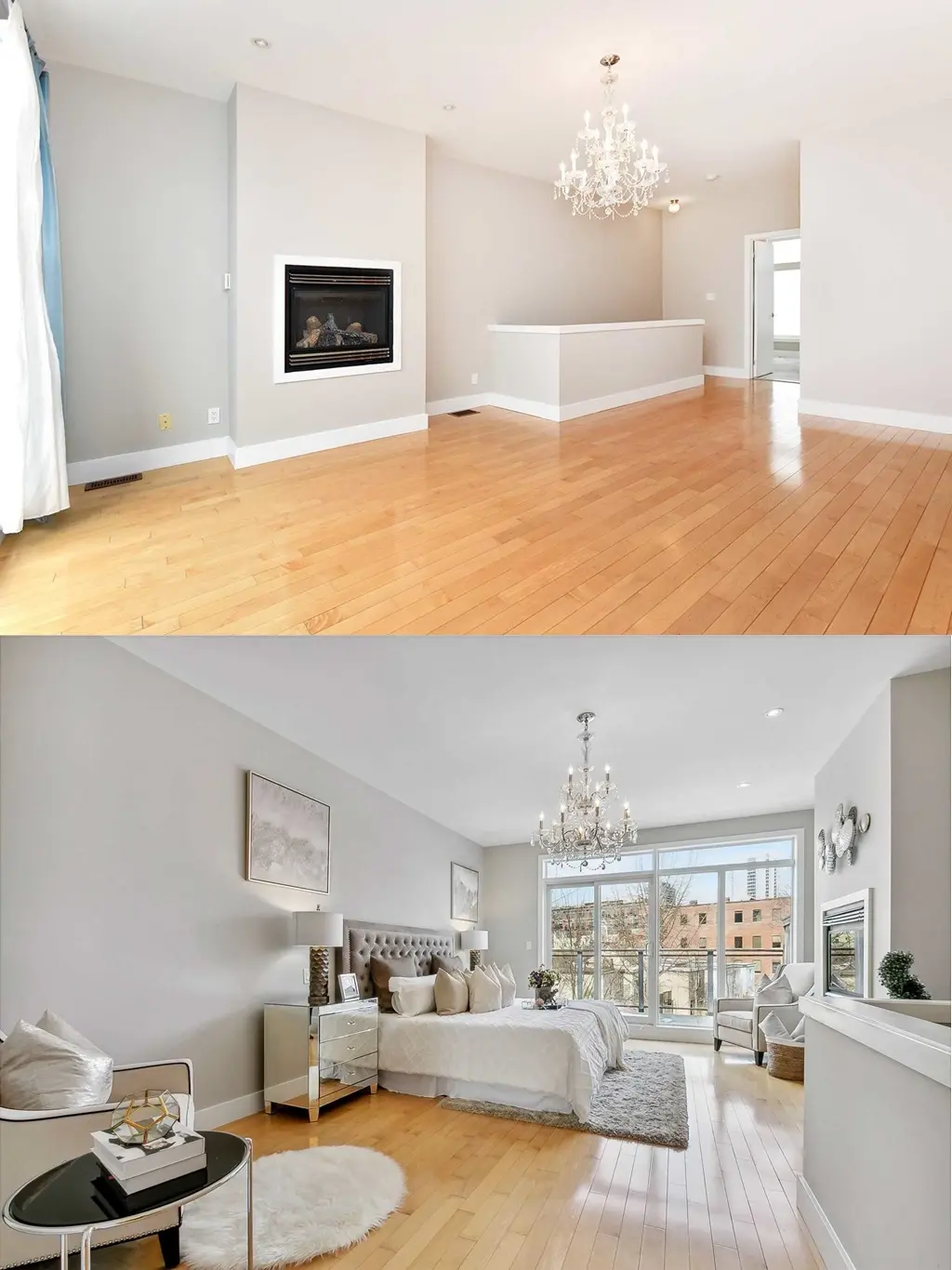
What changes in a successful transformation
An empty room can look smaller than it is because buyers have no scale reference. An occupied room can feel smaller because furniture blocks sightlines or too many objects compete for attention. Staging corrects those problems through editing, placement and proportion.
- Furniture establishes scale and a clear path through the room.
- Lighting, art and textiles add contrast that improves photography.
- Consistent styling connects separate rooms into one listing story.
Before-and-after should reveal the property
A transformation is useful when buyers notice the windows, ceiling height, fireplace, floor plan or relationship between rooms more clearly. If the design becomes the only thing people see, the staging has gone too far.
The most effective comparison therefore looks beyond decoration. It asks whether the staged version explains the room faster and presents the home more confidently.
Vacant and occupied homes change differently
Vacant staging builds the presentation from the ground up. Occupied staging is more selective: retain the seller’s strongest pieces, remove what weakens the room and add only what the listing needs.
Astra reviews the property and selected rooms before deciding which approach will create the clearest result.